

Did you know up to 50% of Americans have tried a low-carb diet? This shows how popular diets like the ketogenic and Atkins diets have become. But are they really good for losing weight and managing fat?
Let’s look at the good and bad sides of low-carb diets. Many people lose weight quickly at first. They also might feel more energetic and have better blood sugar control.
But, there are downsides too. Some people might not get enough nutrients or find it hard to stick with it long-term. It’s important to think about these points before deciding if a low-carb diet is right for you.
Quick Recommendation: Our blog is filled with tips and guides to weight loss. If your seeking for a proven, safe and tested product that has fat burning ability, boost metabolism and increased energy level and anti aging. This product is for you Nagano Fat Burning Tonic
Understanding Low-Carb Diets
Low-carb diets have become popular for their success in weight loss and health improvement. They focus on cutting down on carbs, one of the main nutrients. This is alongside proteins and fats.
Carbs are key for energy, turning into glucose in your body. Eating less carbs lowers blood glucose and insulin levels. This can help burn fat and aid in weight loss.
Staying on a low-carb diet can lead to nutritional ketosis. This is when your body uses fat for energy instead of carbs. It’s seen in diets like the ketogenic plan.
Choosing a low-carb diet can have many benefits. Some want to lose weight, while others aim to control blood sugar or boost metabolism. Knowing how carbs work can guide you in deciding if a low-carb lifestyle is right for you.
How Low-Carb Diets Aid Weight Loss
Low-carb diets are a favorite for those wanting to lose weight. They work by boosting fat burning. When you eat fewer carbs, your body uses fat for energy, helping you lose weight.

Low-carb diets also help by making you feel less hungry. This makes it easier to follow your diet. Your body becomes better at using energy, which helps prevent weight gain.
These diets also help control blood sugar levels. With fewer carbs, your blood sugar stays stable. This helps with weight loss and improves your health. Plus, stable blood sugar means you’re less likely to snack on unhealthy foods.
Scientific Support for Low-Carb Diets
Low-carb diets have a lot of scientific support. Many clinical trials and studies have shown they help improve health. They are not just a passing trend but have solid evidence backing them.
Studies have found that low-carb diets lead to better weight loss. They also help lower risks of diabetes and heart disease. This makes them a strong choice for improving health.
Low-carb diets are also great for fighting obesity. They help reduce body fat, especially around the belly. People on these diets often see better insulin control and lower blood sugar.
To sum up, the science supports low-carb diets. They are backed by many studies and trials. This makes them a good choice for those wanting to get healthier.
Potential Health Benefits of Low-Carb Diets
Low-carb diets are often linked to weight loss. But they offer more than just weight loss. They can also improve your cholesterol levels, which is key for heart health. Eating fewer carbs can lower bad cholesterol and raise good cholesterol.
Low-carb diets also help with blood pressure. Research shows they can lower blood pressure significantly. This is good for your heart and reduces the risk of strokes and other blood pressure issues.
Quick Recommendation: Our blog is filled with tips and guides to weight loss. If your seeking for a proven, safe and tested product that has fat burning ability, boost metabolism and increased energy level and anti aging. This product is for you Nagano Fat Burning Tonic

Low-carb diets are great for managing type 2 diabetes too. They help keep blood sugar levels stable. This can make it easier to control diabetes, sometimes even reducing the need for medication.
Finally, low-carb diets may also lower inflammation in your body. Inflammation is a major cause of many chronic diseases. Reducing it can improve your overall health and well-being. These benefits are why many health experts suggest trying a low-carb diet.
Common Misconceptions About Low-Carb Diets
Low-carb diets often get a bad rap. People think eating more fat means higher heart risks. But, not all fats are bad. Foods like avocados and nuts have healthy fats that are good for you.
There’s also a big mix-up about ketosis. Some think it’s the same as ketoacidosis, a serious condition. But, ketosis is just your body using fat for energy. It’s safe and common in low-carb diets. Ketoacidosis, on the other hand, is a serious issue linked to diabetes.
Some also doubt if low-carb diets can last. They say it’s hard to keep up with cutting carbs. But, research proves that with the right foods, low-carb diets can be a healthy choice for life.
Challenges and Drawbacks of Low-Carb Diets
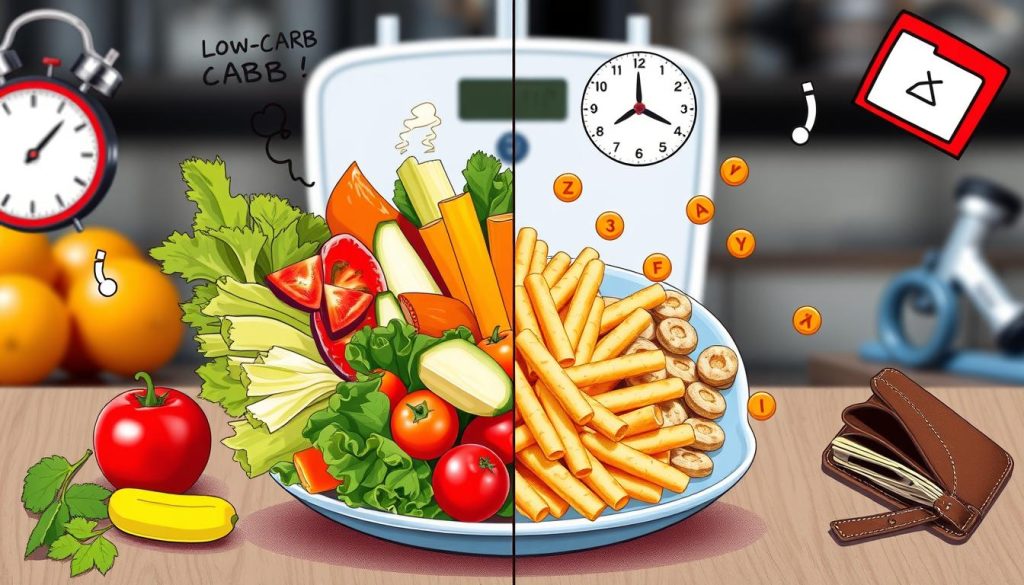
Starting a low-carb diet has its own set of challenges. One big issue is nutritional deficiencies. Without careful planning, you might miss out on important nutrients found in carbs. This can lead to health problems if not managed right.
The restrictive nature of the diet is another big challenge. Cutting out carbs can make you feel like you’re missing out on food choices. This can make it hard to stick to the diet, especially when eating out with friends and family.
Quick Recommendation: Our blog is filled with tips and guides to weight loss. If your seeking for a proven, safe and tested product that has fat burning ability, boost metabolism and increased energy level and anti aging. This product is for you Nagano Fat Burning Tonic
Also, you’ll face initial side effects like the “keto flu.” Symptoms like fatigue, headaches, and irritability can happen as your body gets used to less carbs. These side effects are usually short-term but can be tough for beginners.
Is a Low-Carb Diet Right for You?
Starting a low-carb diet can be rewarding. But first, think about your health goals. Are you trying to lose weight, control blood sugar, or boost your health? Knowing your goals helps decide if a low-carb diet is right for you.
Your food preferences matter too. If you love pasta, rice, or bread, switching to low-carb might be tough. But, there are tasty low-carb options that can meet your cravings and help you reach your goals.
Also, consider any health conditions you have. Talking to a doctor is important. They can tell you if a low-carb diet is good for you. Some health issues, like diabetes or heart disease, might benefit from fewer carbs, but a doctor’s advice is crucial.
Finally, think about how well a low-carb diet fits your lifestyle. It needs careful meal planning and sticking to it, even when life gets busy. Ask yourself if this diet matches your long-term health goals and daily life.
Combining Low-Carb Diets with Exercise
Boosting your exercise performance on a low-carb diet might seem tough. But it’s definitely doable. Regular physical activity helps with weight loss and keeps muscles strong. A steady workout routine boosts your energy, even with less carbs.

Finding the right balance between diet and exercise is key. At first, you might feel less energetic. But your body will get used to it over time. This adjustment is important for keeping up with workouts and muscle health.
Strength training is especially good for keeping muscles strong. Pairing it with a low-carb diet helps you lose weight and keep or even grow muscle. The mix of exercise and smart dieting leads to better fitness and health.
Real-Life Success Stories and Testimonials
Embarking on a low-carb diet brings unique personalized experiences to those who try it. People all over the United States have shared their weight loss journeys. They show how this diet can change lives for the better.
Sarah, for instance, had a hard time managing her weight for years. She started following low-carb principles and lost weight. She also felt more energetic and mentally clear. Her story shows how this diet can improve your life.
Michael’s story is also inspiring. He had health issues like prediabetes and tried a low-carb diet. His blood sugar levels got better, and his health improved a lot. His story proves the long-term benefits of this diet.
These stories show how low-carb diets can change lives. They help people fight obesity and prevent chronic diseases. Sarah, Michael, and others have seen big changes in their lives because of this diet.
If you’re thinking about trying a low-carb diet, these stories can inspire you. They show that with hard work and the right diet, amazing lifestyle transformations are possible.
Quick Recommendation: Our blog is filled with tips and guides to weight loss. If your seeking for a proven, safe and tested product that has fat burning ability, boost metabolism and increased energy level and anti aging. This product is for you Nagano Fat Burning Tonic
Tips for Starting a Low-Carb Diet
Starting a low-carb diet can feel overwhelming. But with good meal planning and strategies, it can be easier. First, plan your meals for the week. Choose foods that are full of nutrients.

Then, go grocery shopping with a list. Look for low-carb foods like leafy greens and lean proteins. Shopping the store’s edges often gets you the best fresh items. Try new foods like cauliflower rice and almond flour to curb cravings.
Cravings are a big challenge at the start. Keep healthy snacks like nuts and veggies handy. Drinking water and getting enough sleep also help control cravings.
Start small when you begin. Reduce your carb intake slowly and add low-carb alternatives. This helps your body adjust better.
Remember, balance is important. Even with less carbs, make sure you get all the nutrients you need. Listen to how your body feels and adjust as needed. The aim is to make low-carb living a part of your everyday life.
Preparing for a Low-Carb Lifestyle Change
Starting a low-carb diet means a big change. First, you need a kitchen overhaul. Get rid of high-carb foods and fill your kitchen with fresh veggies, lean meats, and healthy fats. A well-stocked kitchen makes it easier to stay on track.
Building a strong support system is key. It could be your family, friends, or an online group. Having people who support and keep you on track is vital. Share your journey and tips to stay motivated.
It’s also important to set realistic goals. Start with small, achievable goals and then raise them as you get better. Celebrate every small win, as it helps build lasting habits.
Finally, practice mindful eating. Focus on your food, enjoying each bite without distractions. This way, you’ll not only enjoy your meals more but also digest better and feel more satisfied.
Conclusion
If you’ve made it this far, you know a lot about low-carb diets. You’ve learned how they help with weight loss and their health benefits. You’re ready to decide if this diet is for you.
Remember, everyone’s health journey is different. What works for one person might not work for another. It’s important to create a plan that fits your needs and likes.
Starting a low-carb diet can be tough, but there are ways to beat the challenges. By adding exercise and using success stories for motivation, you can succeed. The goal is to find a plan that you can easily follow every day.
Changing your diet or lifestyle is a big step. It’s a journey that requires learning and adjusting along the way. With the advice given, you have a guide to help you.
Be open-minded and patient with yourself as you find what works for you. This journey is about learning and growing.
Quick Recommendation: Our blog is filled with tips and guides to weight loss. If your seeking for a proven, safe and tested product that has fat burning ability, boost metabolism and increased energy level and anti aging. This product is for you Nagano Fat Burning Tonic