

Ever wondered why some diets work while others don’t? It might all come down to a simple idea: calorie deficit. Learning about weight loss science and calorie counting can make dieting easier. It helps you reach your health goals faster.
A calorie deficit is easy to understand. It’s the key to dieting effectiveness. It’s about eating fewer calories than you burn. But how does this simple idea lead to losing fat?
Quick Recommendation: Our blog is filled with tips and guides to weight loss. If your seeking for a proven, safe and tested product that has fat burning ability, boost metabolism and increased energy level and anti aging. This product is for you Nagano Fat Burning Tonic
What is a Calorie Deficit?
A calorie deficit happens when you eat fewer calories than your body needs. It’s a key way to lose weight. When you eat, your body turns food into energy, which it uses for things like breathing and moving.
To lose weight, you need to burn more calories than you eat. This way, your body uses fat for energy, helping you lose weight. It’s a proven method used in many diets.
You don’t have to starve to create a calorie deficit. It’s about choosing healthier foods and being active. Learning about calorie balance helps you reach your weight loss goals.
How Your Body Uses Energy
Understanding how your body uses energy is key to managing your weight. Your body burns energy in different ways. These include basal metabolic rate (BMR), physical activity, and digestion. Each one is important for your daily calorie needs.
Basal metabolic rate is the energy your body uses when you’re resting. It covers basic functions like breathing and growing cells. BMR is the biggest part of your daily energy use, making up 60-75% of it. Knowing your BMR helps you figure out how many calories you need without moving.
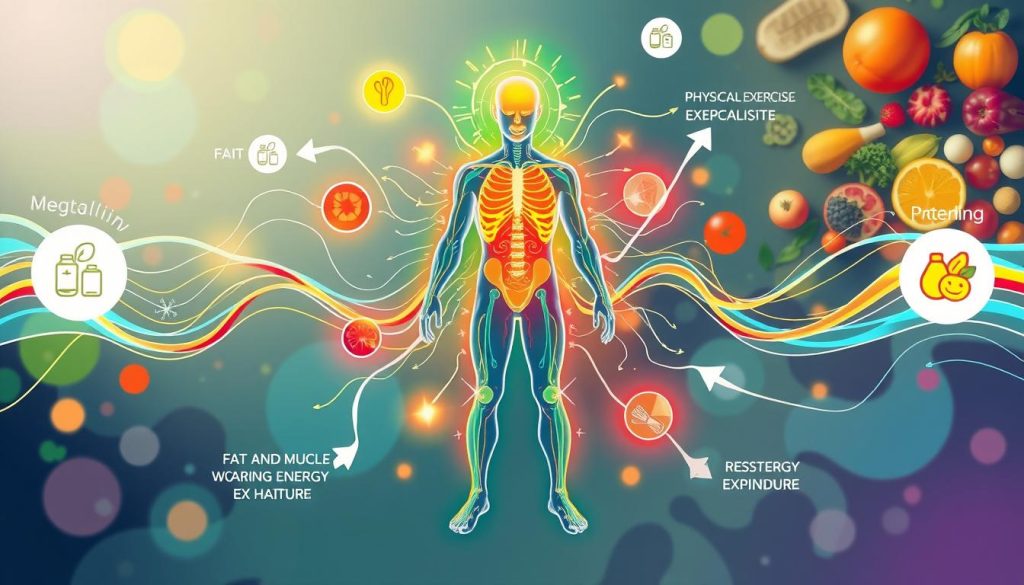
Physical activity is also a big part of energy use. This includes both exercise and daily activities like walking. The calories you burn from moving help you lose weight.
The thermic effect of food (TEF) also affects energy use. It’s the energy needed to digest and process food. Although TEF is smaller, about 10% of your daily energy, it still matters for your calorie needs.
In short, knowing about BMR, physical activity, and TEF helps you understand energy use. This knowledge helps you make better choices for weight loss.
The Role of Metabolism in Weight Loss
Understanding metabolism is key to reaching your health goals. Your metabolic rate is how fast your body turns food into energy. It changes based on age, muscle, and hormones.
Your thyroid is crucial for your metabolic rate. It decides how fast your body uses energy, which is vital for calorie burning. Metabolic adaptation is when your body adjusts energy use based on diet and activity. This can make losing weight harder as your body tries to stay balanced.
As you get older, your metabolic rate slows down, and muscle mass decreases. This affects calorie burning. Hormones also play a big role; imbalances can speed up or slow down metabolism, impacting weight loss.

Building muscle through strength training boosts your metabolic rate. The more muscle, the more calories you burn at rest. This makes losing weight more effective.
In conclusion, knowing how to optimize your metabolism helps you make better health choices. Understanding metabolic adaptation and the importance of muscle mass can lead to lasting weight loss.
The Science Behind Calorie Deficit for Weight Loss
Exploring the science of calorie deficit reveals how your body reacts to less energy. When you eat fewer calories than you burn, your body uses fat for energy. This leads to losing fat.
This fat loss comes from breaking down fat cells for energy. In dieting, knowing this helps create better weight loss plans. Cutting calories not only uses fat but also changes how your body works, affecting your weight over time.

The ‘set point’ theory also sheds light on weight management. It says your body prefers a certain weight, based on genes and environment. Changing this set point through diet and lifestyle can help keep you at a healthy weight.
Quick Recommendation: Our blog is filled with tips and guides to weight loss. If your seeking for a proven, safe and tested product that has fat burning ability, boost metabolism and increased energy level and anti aging. This product is for you Nagano Fat Burning Tonic
How to Calculate Your Caloric Needs
Knowing how to figure out your daily calorie needs is key for managing your weight. Your calorie target changes based on your age, sex, weight, height, and how active you are. First, you need to find your Basal Metabolic Rate (BMR). This is the calories your body burns at rest.
There are many ways to find your BMR. The Harris-Benedict Equation is a well-known method. For women, the formula is: 655 + (4.35 x weight in pounds) + (4.7 x height in inches) – (4.7 x age in years). For men, it’s: 66 + (6.23 x weight in pounds) + (12.7 x height in inches) – (6.8 x age in years).
After finding your BMR, you need to add your activity level to get your Total Daily Energy Expenditure (TDEE). Use the right activity factor: Sedentary (little or no exercise): BMR x 1.2, Lightly active (light exercise/sports 1-3 days/week): BMR x 1.375, Moderately active (moderate exercise/sports 3-5 days/week): BMR x 1.55, Active (hard exercise/sports 6-7 days a week): BMR x 1.725, Very active (very hard exercise/sports & physical job): BMR x 1.9.
Once you know your daily calorie target, using apps like MyFitnessPal and Lose It! can help. These apps let you track your calories. Keeping your data up to date will help you reach your weight goals.
Common Myths About Calorie Deficit
Many people believe in diet myths, especially about “starvation mode.” They think cutting calories too much will slow down weight loss. But, while your metabolism might slow a bit, you won’t stop losing weight. The idea of starvation mode is often too extreme.
Another myth is that all calories are the same. This can lead to unhealthy eating, focusing only on counting calories. But, it’s important to remember that not all calories are equal. Foods high in nutrients are better for your health, making weight loss more effective.

It’s also key to know that a small calorie deficit is best for losing weight. Cutting calories too much is hard to keep up and can harm your health. A balanced approach, with a bit less calorie intake and more exercise, is usually the best way to succeed.
Knowing the truth about calorie deficit can help you lose weight in a healthier way. Focus on eating well and avoid simple advice that doesn’t understand how our bodies work. By clearing up these myths, you’re more likely to see lasting results and better health.
Practical Tips for Maintaining a Calorie Deficit
For lasting weight loss, it’s not just about cutting calories. You need healthy eating habits and sticking to your diet. Start by adding more whole foods to your meals. Fresh fruits, veggies, lean proteins, and whole grains keep you full and give you important nutrients.

It’s important to find a balance. Avoiding all foods can lead to failure. Instead, aim for steady progress. Set achievable goals and let yourself have treats now and then to avoid feeling left out.
Small changes can make a big difference. Try to move more by doing activities you like. This could be a fast walk, cycling, or dancing. These activities help burn calories and support your weight loss.
It’s not about being perfect. It’s about making small, steady improvements. By focusing on healthy eating and sticking to your diet, you’re more likely to keep a calorie deficit and lose weight for good.
Potential Pitfalls to Avoid
Starting a weight loss journey can be tough. One big mistake is cutting your diet too much. It might seem like a quick fix, but it can lead to health problems.
It’s also important to focus on a balanced diet. Many people just cut calories without thinking about nutrients. This can make you tired and slow down your progress. Eating foods rich in nutrients helps your body even when you’re eating fewer calories.
Don’t just count on exercise to lose weight. While it’s important, it’s not everything. You need to balance diet and exercise to avoid overdoing it.
By knowing these common mistakes, you can make a better plan. Aim for small, lasting changes. This way, you avoid diet extremes and keep your body nourished.
Psychological Aspects of Calorie Deficit
Starting a calorie deficit journey is more than just a physical challenge. It’s also a mental one. Understanding how it affects your mood and actions is key. Changing your diet mindset means seeing food differently, not just eating less.
Many people struggle with emotional eating, which can stop their progress. Emotional eating often comes from stress, boredom, or other feelings we try to hide. To beat this, building a healthy relationship with food is vital. This means facing and dealing with the emotions that make us eat, not just trying to ignore them.
Keeping a positive diet mindset is also important for staying motivated. Motivation isn’t just about starting strong but keeping it up through the tough times. Celebrating small wins and seeing setbacks as part of the journey helps keep things balanced.
Finally, don’t forget about your mental health. Losing weight shouldn’t hurt your mind. Using mindfulness, journaling, or talking to a psychologist can help take care of your mental and physical health.
Conclusion
Looking back at our talk on scientifically-backed dieting, we see that a calorie deficit is key for lasting weight loss. It works by eating fewer calories than your body needs. This creates an energy gap that makes your body burn stored fat for energy.
We’ve covered what a calorie deficit is and how your body uses energy. We also talked about how metabolism plays a big role in losing weight. You learned how to figure out your caloric needs and debunked myths about calorie deficits.
We shared tips for sticking to this diet, common challenges, and the mental side of dieting. It’s clear that a balanced mind and steady effort are crucial.
But calorie deficits do more than help you lose weight. Done right, they lead to lasting, healthy lifestyle changes. By staying informed, setting achievable goals, and focusing on your well-being, you can make lasting, positive changes. Here’s to making scientifically-backed dieting work for you!
Quick Recommendation: Our blog is filled with tips and guides to weight loss. If your seeking for a proven, safe and tested product that has fat burning ability, boost metabolism and increased energy level and anti aging. This product is for you Nagano Fat Burning Tonic