
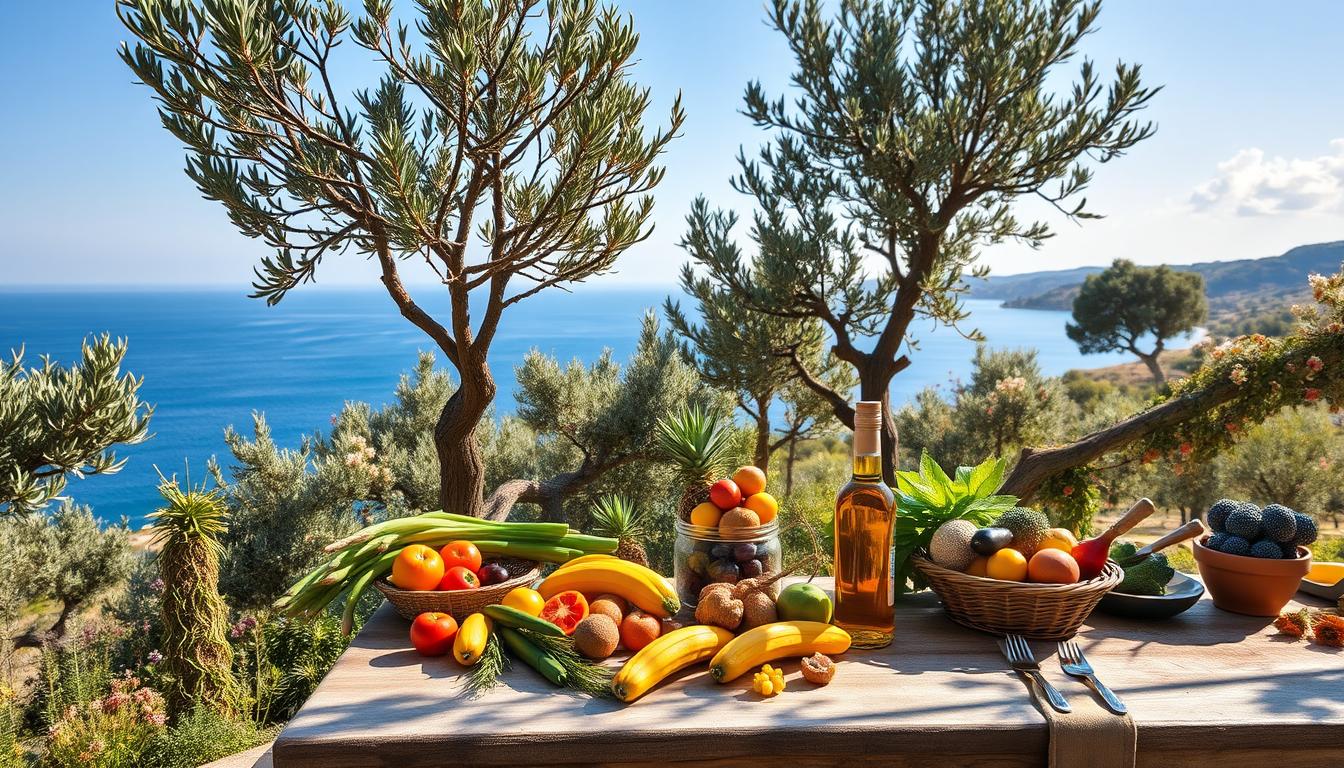
The Mediterranean Diet is known for its balanced way to lose weight. It focuses on eating whole, unprocessed foods. This diet is inspired by the eating habits of countries like Greece and Italy. It helps manage weight and improves overall health.
This diet is rich in fruits, vegetables, whole grains, nuts, and olive oil. It also includes moderate amounts of fish and poultry. Sometimes, it allows for small amounts of dairy and red meat. Studies show it helps lose weight, improves heart health, and lowers the risk of chronic diseases.
The Mediterranean Diet teaches the importance of portion control and mindful eating. It’s not just about what you eat, but also how you enjoy your meals and stay active.
Quick Recommendation: Our blog is filled with tips and guides to weight loss. If your seeking for a proven, safe and tested product that has fat burning ability, boost metabolism and increased energy level and anti aging. This product is for you Nagano Fat Burning Tonic
What is the Mediterranean Diet?
The Mediterranean Diet is more than just a diet. It’s a way of life from Mediterranean countries. It focuses on balance and enjoying good food.
It’s all about eating plants like fruits, veggies, whole grains, legumes, and nuts. These foods are full of nutrients. Olive oil, rich in healthy fats, is a big part of it.
Fish and seafood are also key, giving you protein and Omega-3s. Red meat is eaten less, showing a smart balance in protein. And, a little red wine with meals adds to the diet’s enjoyment.
In short, the Mediterranean Diet is about living well through balanced eating. It’s about the pleasure of cooking and sharing good food.
How Does the Mediterranean Diet Promote Weight Loss?
The Mediterranean Diet is great for losing fat because it has the right mix of nutrients. It avoids foods high in saturated fats and sugars. Instead, it offers healthier choices that boost your metabolism and keep you full.
Whole grains, fruits, and vegetables are rich in fiber. This fiber helps you feel full, so you eat fewer calories. Monounsaturated fats in olive oil and nuts also help you feel full longer. This means you’re less likely to overeat and can better control your calorie intake.
Also, eating moderate amounts of protein from fish and poultry helps keep your muscles strong. This is important for a higher metabolic rate, which is key for losing weight.

Regular exercise is a big part of the Mediterranean lifestyle. It helps burn calories and manage weight well. The Predimed study showed that this diet can lead to a lot of fat loss. It also lowers the risk of diseases linked to obesity.
Essential Foods in the Mediterranean Diet
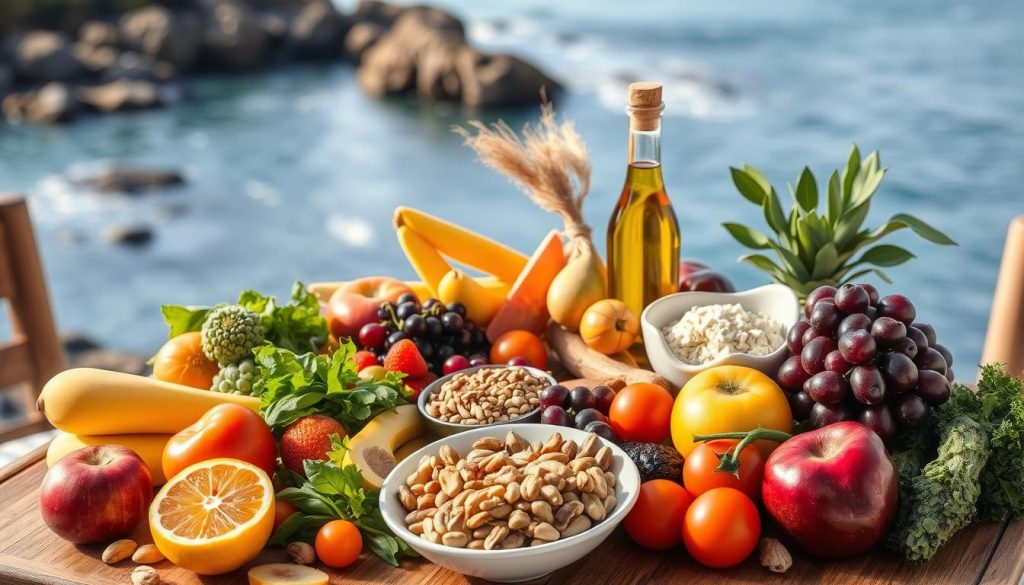
The Mediterranean diet is full of whole foods that give you lots of nutrients. You’ll find vegetables, fruits, nuts, seeds, legumes, and whole grains at the heart of it. These foods are packed with antioxidants, which protect your body.
Olive oil is a key fat in this diet, offering monounsaturated fats and polyphenols. These not only make your food taste better but also help your heart. Adding olive oil to your meals is a simple way to stay healthy.
Fatty fish like salmon, mackerel, and sardines are big in this diet because of their omega-3 fatty acids. Eating these fish regularly can boost your heart and brain health.
Poultry, eggs, cheese, and yogurt are eaten in small amounts. They add protein and calcium without too much fat or sugar. This keeps your diet balanced.
The Mediterranean diet limits processed foods, added sugars, and red meats. This helps keep it healthy. Eating whole foods means you’re giving your body the nutrients it needs.
Garlic, onions, tomatoes, and greens are key to the diet’s flavor and health. They make your food taste great and add important vitamins and minerals. This means more antioxidants for you.
Quick Recommendation: Our blog is filled with tips and guides to weight loss. If your seeking for a proven, safe and tested product that has fat burning ability, boost metabolism and increased energy level and anti aging. This product is for you Nagano Fat Burning Tonic
How to Start the Mediterranean Diet
Starting the Mediterranean diet can change how you eat and live. Begin by adding more fruits and veggies to your meals. Aim for at least five servings a day. These foods are key to the diet and help with your transition.
Switch butter for healthier fats like olive oil and avocados. These changes are simple but make a big difference. Using olive oil as your main fat makes meal planning easier.
Choose whole grains over refined ones. Pick whole wheat bread instead of white, and brown rice over white. These choices help you eat better and make shopping simpler.
Vary your protein sources with fish, legumes, nuts, and seeds. This adds flavor and nutrients to your meals. Limit red meat, choosing lean cuts and eating it only a few times a month.
If you drink alcohol, do it in moderation. Opt for red wine, common in Mediterranean areas. Enjoy it during meals with friends and family, fostering togetherness.

Family meals are crucial in the Mediterranean lifestyle. Use them to bring everyone together and enjoy your meals. This approach improves your diet and makes meal planning a fun, shared activity. By following these steps, you’ll start your Mediterranean diet successfully.
Delicious Mediterranean Diet Recipes
Exploring the Mediterranean diet reveals a world of tasty and healthy meals. Dishes like Greek salad and hummus with pita bread are easy to make. Grilled veggies with olive oil are also a must-try, offering a mix of smoky flavors and olive oil’s richness.
Seafood is a big part of this diet. Choose to grill or bake it to keep the flavors bright and the health benefits. Baked salmon or grilled shrimp with herbs, lemon, and olive oil are both tasty and nutritious.
Don’t skip whole-grain meals. Farro salad with roasted veggies or quinoa tabbouleh are both nourishing and satisfying. These dishes, with their fresh ingredients and wholesome flavors, make healthy eating a pleasure.
Legumes are key in this diet. Lentil soup, chickpea stew, or bean salads are great for protein and fiber. They keep you full and provide the nutrients your body needs.
And remember, there’s room for dessert! Mediterranean diet desserts use natural sweetness. Try an olive oil cake or poached pears with honey. These treats let you enjoy something sweet without giving up on healthy eating.
Exercise and the Mediterranean Diet
Following the Mediterranean Diet is more than just eating well. It’s also about staying active. People in Mediterranean areas often walk a lot and do other activities all day.
Adding structured exercises like cardio, strength training, or yoga can help. These activities support weight loss and health. Plus, they offer a chance to connect with others, just like in Mediterranean cultures.

Quick Recommendation: Our blog is filled with tips and guides to weight loss. If your seeking for a proven, safe and tested product that has fat burning ability, boost metabolism and increased energy level and anti aging. This product is for you Nagano Fat Burning Tonic
Try to do at least 150 minutes of moderate exercise or 75 minutes of vigorous activity each week. This fits well with the Mediterranean way of life. It boosts your health and keeps you living a balanced, healthy life.
The Mediterranean Diet and Heart Health
The Mediterranean Diet is known for boosting heart health. It includes foods like olive oil, nuts, and fatty fish. These help improve your cholesterol levels.
Fruits, vegetables, and whole grains are full of antioxidants. They help lower blood pressure. This combo reduces heart disease risk, offering great protection.
Drinking red wine in moderation is part of the Mediterranean Diet. It may lower heart disease risk. But, it’s important to drink it carefully because of alcohol’s risks.
Eating whole, unprocessed foods is key. It boosts nutrient intake and aids in weight control. Keeping a healthy weight is vital for heart health, and this diet helps a lot.
Studies like the Lyon Diet Heart Study have proven its benefits. People following this diet had fewer heart attacks and strokes. This shows how good it is for your heart.
The Mediterranean Diet for Diabetics
The Mediterranean Diet is great for managing blood sugar and diabetes. It’s full of fiber from whole grains and legumes. This fiber helps slow down how quickly glucose is absorbed, which is good for blood sugar control.
Low-glycemic foods like leafy greens and almonds also help. They prevent blood sugar from rising too fast. This makes the diet perfect for people with diabetes.
Quick Recommendation: Our blog is filled with tips and guides to weight loss. If your seeking for a proven, safe and tested product that has fat burning ability, boost metabolism and increased energy level and anti aging. This product is for you Nagano Fat Burning Tonic
Healthy fats in olive oil and nuts are key for diabetes management. They improve how well your body uses insulin. Fish, rich in omega-3 fatty acids, is also important. It helps your heart, which is vital for people with diabetes.
By choosing the Mediterranean Diet, you’re not just eating a meal plan. You’re adopting a lifestyle that supports your health for the long term. It balances your diet so your body gets what it needs without sudden blood sugar spikes. This makes it a powerful tool for managing type 2 diabetes.
Common Myths about the Mediterranean Diet
It’s key to debunk some common myths about the Mediterranean Diet. Many think it’s too high in fat to be good for you. But, the fats come from olive oil and nuts, which help protect your heart.
Another myth is that you need to drink wine every day to follow this diet. While wine can be part of it, you don’t have to drink to enjoy its benefits. The important thing is to keep things in moderation.
Some believe the Mediterranean Diet is pricey because of its focus on fresh produce and seafood. But, buying what’s in season and local can make it affordable. This way, you get nutritious foods without breaking the bank.
Many think this diet is strict and limits your food choices. But, it’s actually quite flexible and fun. You get to enjoy a wide variety of foods and flavors.
Lastly, some think the Mediterranean Diet is just about food. But, it’s more than that. It also values social connections and staying active, which are key to feeling your best.
Knowing the truth about these myths helps you make better food choices. By understanding these facts, you can fully enjoy the Mediterranean Diet and live a healthier life.
Overcoming Challenges on the Mediterranean Diet
Starting the Mediterranean diet can be tough, especially if you’re used to eating red meat and sugar. Finding new recipes can make the change easier.
Quick Recommendation: Our blog is filled with tips and guides to weight loss. If your seeking for a proven, safe and tested product that has fat burning ability, boost metabolism and increased energy level and anti aging. This product is for you Nagano Fat Burning Tonic
Finding fresh seafood and certain produce can be hard. But, frozen or canned foods are good alternatives. They keep their nutrients and help you eat well.
Eating out might seem hard at first. But, many places now offer Mediterranean diet options. Look for dishes that fit your new eating habits.
Time can be a problem, but meal prep helps. Choose quick foods like salads and grilled meats to save time.
It’s hard to stick to the diet at social events. But, planning ahead lets you enjoy healthy foods and stay on track. This way, you eat well and fit in with your friends.
The Mediterranean Diet vs. Other Popular Diets
When you look at diet comparisons, the Mediterranean Diet stands out. It’s different from diets like the ketogenic or low-carb ones. The Mediterranean Diet focuses on more carbs from whole grains and fruits. This gives you steady energy without cutting carbs too much.
The Mediterranean Diet also differs from vegan or vegetarian diets. Vegan and vegetarian diets don’t include animal products. But the Mediterranean Diet includes fish, dairy, and eggs. This gives you a wider range of protein sources and more nutrients.
Looking at the Mediterranean Diet and Paleo or Whole30 diets shows another big difference. Paleo and Whole30 diets don’t include grains and dairy. But the Mediterranean Diet does, for their health benefits. This makes the Mediterranean Diet more balanced and open to different foods.
The Mediterranean Diet also avoids processed foods, unlike some commercial weight loss plans. It focuses on fresh, whole foods. This not only boosts the diet’s nutritional value but also supports better health. The Mediterranean Diet is flexible and enjoyable, making it easier to stick to for the long term.
Conclusion
Starting the Mediterranean Diet is more than losing weight. It’s a lifestyle choice that focuses on balanced nutrition and overall health. This diet makes eating fun and varied with its fresh, tasty foods.
It helps lower the risk of chronic diseases and boosts heart health. It also helps manage diabetes. The science shows that balanced nutrition improves your health and life quality.
By adding regular exercise and making the diet flexible, the Mediterranean Diet is more than a diet plan. It’s a way of life that makes you feel full of energy and satisfied. As you follow these principles, you’ll enjoy a fulfilling journey to a happier, healthier life.
Quick Recommendation: Our blog is filled with tips and guides to weight loss. If your seeking for a proven, safe and tested product that has fat burning ability, boost metabolism and increased energy level and anti aging. This product is for you Nagano Fat Burning Tonic