

Keeping lean muscle is crucial for boosting your fat-burning potential and health. Unlike fat, muscle burns more calories just by being there. This is why people with more muscle tend to have higher metabolisms, even when they’re not moving.
To keep your muscles strong, add strength training, eat plenty of protein, and get enough sleep. These steps help preserve muscle and boost your metabolism.
Quick Recommendation: Our blog is filled with tips and guides to weight loss. If your seeking for a proven, safe and tested product that has fat burning ability, boost metabolism and increased energy level and anti aging. This product is for you Nagano Fat Burning Tonic
Understanding Lean Muscle Retention
Lean muscle retention means keeping and growing muscle tissue over time. It involves hormone regulation and protein synthesis. Hormones like testosterone and growth hormone, protein intake, and calorie balance are key.
Keeping muscle mass right involves balancing muscle growth and breakdown. Good nutrition and resistance training are crucial. They help create an anabolic state and support protein synthesis.
Resistance training does more than build muscle. It also boosts your metabolism by keeping lean muscle. Knowing this helps create a plan to increase your metabolism and burn more calories.
The Science Behind Muscle Retention and Calorie Burning
Scientists agree that muscle mass greatly affects how many calories we burn at rest. Muscles need more energy to maintain and repair themselves than fat does. This makes keeping muscle mass important for a higher metabolic rate.
When muscles grow, our body burns more energy to build and fix muscle fibers. Weight-bearing exercises, for example, increase calorie burning during and after workouts. This is because of the excess post-exercise oxygen consumption (EPOC) effect.

Quick Recommendation: Our blog is filled with tips and guides to weight loss. If your seeking for a proven, safe and tested product that has fat burning ability, boost metabolism and increased energy level and anti aging. This product is for you Nagano Fat Burning Tonic
On the other hand, muscle breakdown, or catabolism, is also key. Keeping a balance between muscle growth and breakdown helps keep muscles, which boosts our basal metabolic rate (BMR). Hormones also play a big role in our metabolic rate and calorie burning, showing how muscle retention affects our overall health.
Nutrition Tips for Maintaining Lean Muscle
Keeping lean muscle mass up is all about good nutrition, especially high-protein diets. These diets give your muscles the amino acids they need to repair and grow. You can get these amino acids from lean meats, fish, dairy, legumes, and plant-based proteins.
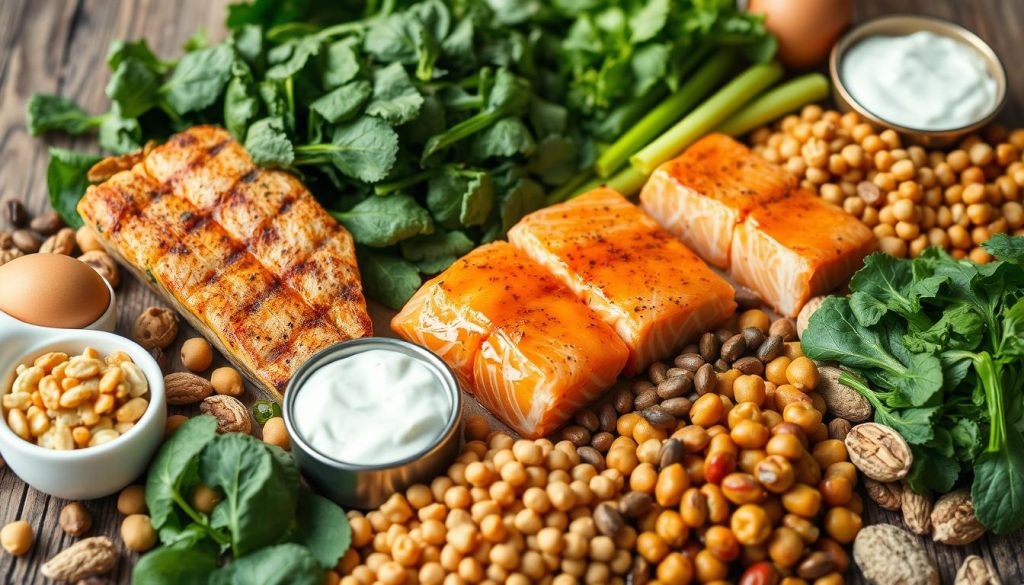
It’s also important to balance your nutrition with the right amount of calories. A bit of extra calories helps your muscles grow without adding too much fat. Make sure to eat foods rich in nutrients to fuel your body well.
When you eat matters too, especially around your workouts. Eating a protein-rich meal or snack after working out helps your muscles recover. This boosts your muscle growth and recovery, leading to better fitness results.
Effective Workouts for Lean Muscle Retention
For effective lean muscle retention, strength training is key. Focus on compound exercises like squats, deadlifts, and bench presses. Use moderate to heavy weights for six to twelve reps to grow and keep muscle.
Progressive overload is important. Gradually increase the weight or reps to keep muscles adapting and strong. Mix compound exercises with isolation exercises for full muscle development and maintenance.
Varying your workouts is also crucial. Try different resistance training techniques or change your exercises to avoid plateaus. A balanced approach that includes strength training, hypertrophy training, and compound exercises is essential for lean muscle retention.

Role of Rest and Recovery in Muscle Retention
Rest and recovery are just as important as working out for keeping muscles. The recovery period importance is huge, as muscles fix themselves mostly when we’re resting. This includes sleep, when our body releases hormones that help fix and grow muscles. Getting 7-9 hours of sleep each night is key for muscle recovery.

Quick Recommendation: Our blog is filled with tips and guides to weight loss. If your seeking for a proven, safe and tested product that has fat burning ability, boost metabolism and increased energy level and anti aging. This product is for you Nagano Fat Burning Tonic
Even on rest days, doing light activities like walking or yoga helps. It boosts blood flow and brings nutrients to muscles, speeding up repair. Stretching and foam rolling also help release muscle tension and prevent injuries. This keeps muscle maintenance steady. Knowing how crucial recovery is and adding sleep and muscle growth strategies to your routine can greatly help.
Supplements to Aid Lean Muscle Retention
Dietary supplements are key in keeping lean muscle, adding to a healthy diet and workout. Protein supplements, like whey or plant-based powders, are great. They help meet protein needs and are easy to take after working out.
Creatine monohydrate boosts strength and muscle growth. It increases ATP, which powers muscles during intense exercise.
Branched-chain amino acids (BCAAs), especially leucine, kickstart muscle growth. BCAAs reduce soreness and fatigue, helping muscles recover faster.
Omega-3 fatty acids from fish oil support muscle growth. They keep cells healthy and reduce inflammation. Adding omega-3s to your routine can improve muscle function and recovery.
Always talk to a healthcare provider before starting supplements. They can guide you on what’s best for your fitness goals and muscle health.
Common Misconceptions About Lean Muscle Retention
Many people believe wrong things about keeping lean muscle. One big myth is that lifting weights always makes you “bulky.” This stops some from doing resistance training, even though it’s key for muscle and fat loss.

Another myth is the spot reduction fallacy. It says you can lose fat in certain areas by working those muscles. But, science proves fat loss happens all over, not just in one spot.
Lastly, the idea that too much protein is needed for muscle is a myth. People think eating lots of protein is a must for muscle growth. But, the body can only use so much protein at once. So, balance and moderation are important for a healthy diet.
Knowing these myths helps us have a better plan for keeping muscle and staying healthy. By understanding these myths, we can use better strategies for muscle building.
Personal Stories: Success with Lean Muscle Retention
Real-life fitness journeys show the strength of sticking to it and using smart plans. These stories often talk about the mix of good food and focused workouts.
Muscle building testimonials tell of people beating plateaus by changing their ways. Some found success by using progressive overload, making their workouts harder to keep growing.
Other success stories point out the importance of when you eat. By planning meals and snacks right, many kept more muscle and got better body shapes.
These tales also highlight the need for long-term effort. People share how staying consistent with good methods not only kept lean muscle but also boosted their strength and fitness.
Through these detailed muscle building testimonials, readers can pick up useful tips. They get inspired to start their own fitness journeys, armed with advice from those who’ve made it.
Promotes Lean Muscle Retention, Which Naturally Burns More Calories
Building lean muscle mass has many benefits, especially for your metabolism. It helps you burn more calories every day. It also makes your body more toned and defined.
Adding resistance training and high-intensity interval training (HIIT) to your routine can really help. These activities boost your metabolism and muscle retention.
Having more lean muscle does more than just look good. It also makes your body better at handling insulin, improves heart health, and boosts strength. Working on keeping lean muscle is key to managing weight well.
It ensures you burn more calories all day long. This is a smart way to keep your weight in check.
Combining Diet and Exercise for Optimal Results
To keep muscles lean, you need a good mix of diet and exercise. A plan that includes strength training and a balanced diet is key. This combo helps grow muscles in a lasting way. It’s all about the balanced workout and diet for the best health benefits.
Strength training is vital for building muscles. But, eating right is just as important. You need proteins, healthy fats, and carbs to fuel your workouts and help muscles heal.
Proteins are the foundation of muscles. Eating them in every meal helps muscles recover and grow. Healthy fats are also crucial for your overall health. Complex carbs give you energy for workouts and keep you going all day.
Combining exercise with the right food is the secret to sustainable muscle growth. This approach not only keeps muscles strong but also boosts your overall health. It makes reaching your fitness goals easier and more lasting.
Conclusion
Keeping lean muscle is more than just working out. It boosts your metabolism, helping you burn calories naturally. Knowing how to keep muscle is key, along with eating right, working out well, and resting enough.
Supplements can help, but choose wisely. Knowing the truth about muscle retention helps you set realistic fitness goals. Success stories show the power of lean muscle and motivate us to keep going.
By following these tips, you’re investing in your health and strength for the long run. Lean muscle is not just about looks; it’s about being healthy. A balanced fitness plan leads to lasting health and a strong body.
Quick Recommendation: Our blog is filled with tips and guides to weight loss. If your seeking for a proven, safe and tested product that has fat burning ability, boost metabolism and increased energy level and anti aging. This product is for you Nagano Fat Burning Tonic