
Ever felt lost in the sea of diet advice? You’re not alone. Finding the right path in nutrition can be tough, especially when you want to lose weight. But, learning about macronutrients can make your journey easier.
Remember when you felt your best? Full of energy and life? The secret to getting back to that state is in your food. Macro tracking is a game-changer for your health and well-being.
We’ll show you how protein, carbs, and fats are key to a balanced diet. Knowing your macros is essential for managing your weight. With this knowledge, you can make choices that support your health goals. Let’s explore the world of macronutrients together!
Quick Recommendation: Our blog is filled with tips and guides to weight loss. If your seeking for a proven, safe and tested product that has fat burning ability, boost metabolism and increased energy level and anti aging. This product is for you Nagano Fat Burning Tonic
What Are Macros?
Macros, short for macronutrients, are the essential nutrients your body needs in large amounts. They are crucial for your body to function correctly. The three main macros in food are protein, carbohydrates, and fats. Each plays a key role in your daily energy and health.
Protein is vital for building and repairing body tissues. It also helps produce enzymes and hormones and supports muscle growth. You can find protein in meat, fish, eggs, and legumes. Adding these to your meals ensures your body gets the necessary building blocks for optimal performance.
Carbohydrates, or carbs, are the body’s main energy source. They break down into glucose, which fuels every cell. You can find carbs in grains, fruits, vegetables, and dairy products. A healthy balance of carbs in your diet keeps your energy levels up all day.
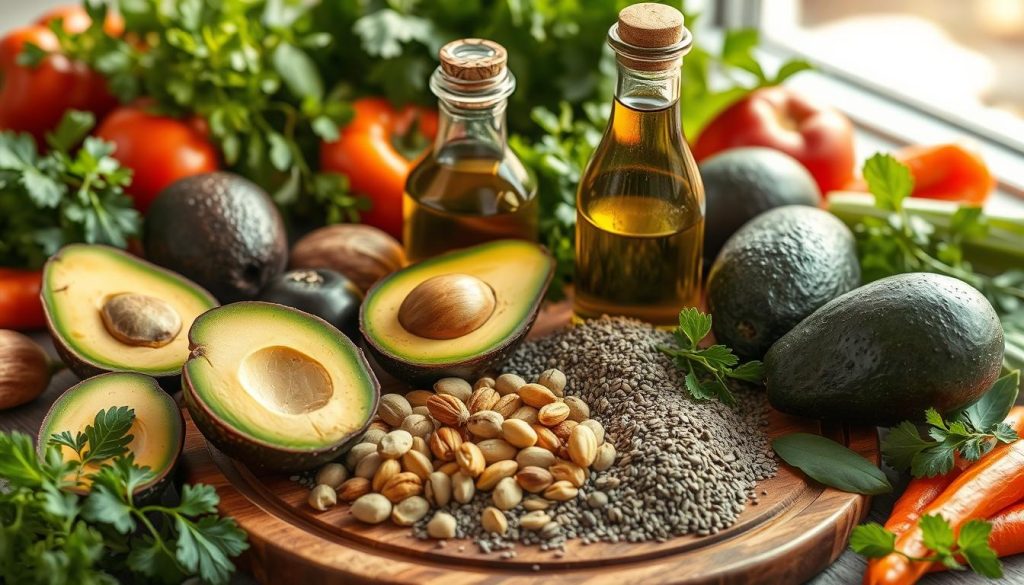
Fats are also essential, though sometimes misunderstood. They provide long-lasting energy and help absorb vitamins. They are also vital for brain health and hormone production. Healthy fats come from avocados, nuts, seeds, and olive oil. Adding good fats to your meals supports your overall well-being and keeps your energy up.
Understanding the role of proteins, carbohydrates, and fats in your diet is key. It helps you make informed choices for a balanced and healthy lifestyle. Knowing how to identify macros in food ensures you meet your dietary needs and optimize your body’s performance.
The Importance of Protein in Your Diet
Protein is key for good health and wellness. It’s important for muscle repair. When you exercise, your muscles get stressed and tiny tears happen. Eating enough protein helps fix these muscles, making them stronger and bigger.
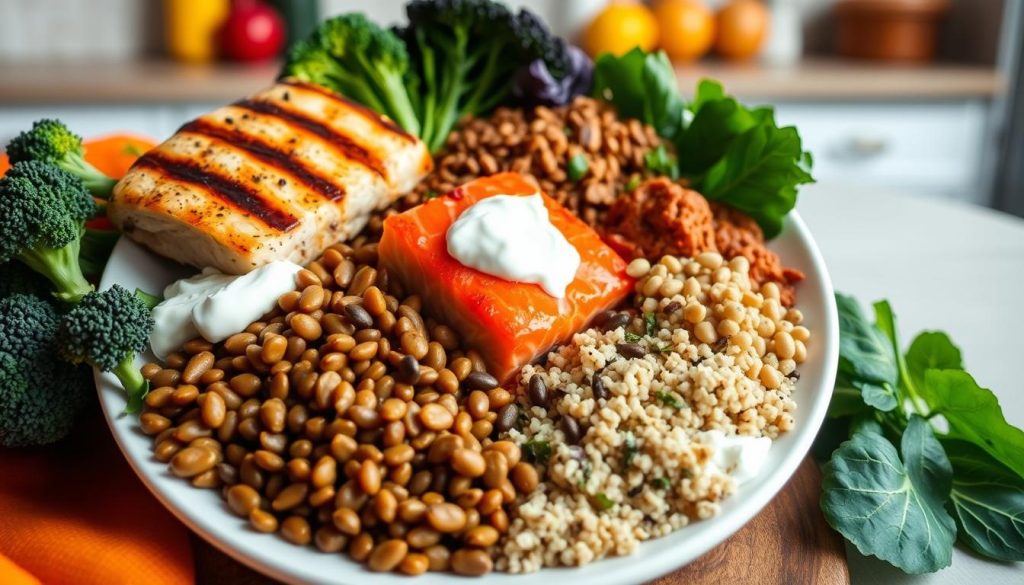
Protein also helps you feel full for longer. It’s different from carbs, which digest fast. This feeling of fullness can help you eat less and stick to your diet goals.
Adding protein-rich foods to your diet keeps your muscles from shrinking. This is vital when you’re eating fewer calories. Foods like chicken breast, Greek yogurt, and tofu are great for this.
Knowing how protein helps with muscle repair, keeps you full, and saves lean body mass is important. By focusing on protein, you help your body work better and reach your health goals.
The Role of Carbohydrates
Carbohydrates are your body’s main energy source. They are key to keeping you full of energy all day. Knowing the difference between complex carbs and simple sugars is important for your health and weight loss.
Complex carbs are in whole grains, veggies, and legumes. They are digested slowly, giving you steady energy. They also help control your blood sugar and are full of nutrients. Plus, they have lots of fiber intake, which helps with digestion and keeps you full.
Simple sugars are in sweet snacks, sodas, and processed foods. They are quickly absorbed, causing a quick rise in blood sugar followed by a crash. This can make you feel tired and want to eat more.
To improve your diet, choose complex carbs over simple sugars. Add foods high in fiber intake like brown rice, oatmeal, and quinoa to your meals. These foods help keep your energy steady, aid in weight management, and boost your overall health.
By being smart about your carb choices, you can use this important energy source to boost your metabolism. This helps you stay active throughout the day. Remember, the quality of your carbs really matters for reaching your health goals.
Understanding Fats: Good vs. Bad
It’s important to know the difference between good and bad fats in your diet. Healthy fats are key for your body’s health. Knowing which ones to eat can greatly improve your well-being.
Saturated fats and trans fats are considered bad fats. They can raise your heart disease risk and cholesterol levels. You can find them in processed foods, red meat, and full-fat dairy.
But, there are good fats too. Unsaturated fats are great for your health. They include monounsaturated and polyunsaturated fats. Foods like avocados, nuts, seeds, and olive oil are full of these.
Omega-3 fatty acids are special unsaturated fats. They’re good for your heart, reduce inflammation, and help your brain. You can find omega-3s in fatty fish like salmon, mackerel, and sardines.
To eat more healthy fats, try avocado toast, a handful of almonds, or grilled salmon. These choices will help you eat better and feel better.
Quick Recommendation: Our blog is filled with tips and guides to weight loss. If your seeking for a proven, safe and tested product that has fat burning ability, boost metabolism and increased energy level and anti aging. This product is for you Nagano Fat Burning Tonic
Why Balance Is Key for Weight Loss
A balanced diet is key for lasting weight loss. It’s important to eat the right mix of protein, carbs, and fats. This helps your body work well and keeps you healthy in the long run.
When you eat the right mix of macros, your body works better. Protein helps fix and grow muscles. Carbs give you energy, and fats help make hormones. This mix keeps your energy up and your body running smoothly.
Diets that cut out one macro too much can lead to problems. For example, eating too few carbs or fats might help you lose weight at first. But it can also make you feel tired, upset your hormones, and cause nutritional gaps.
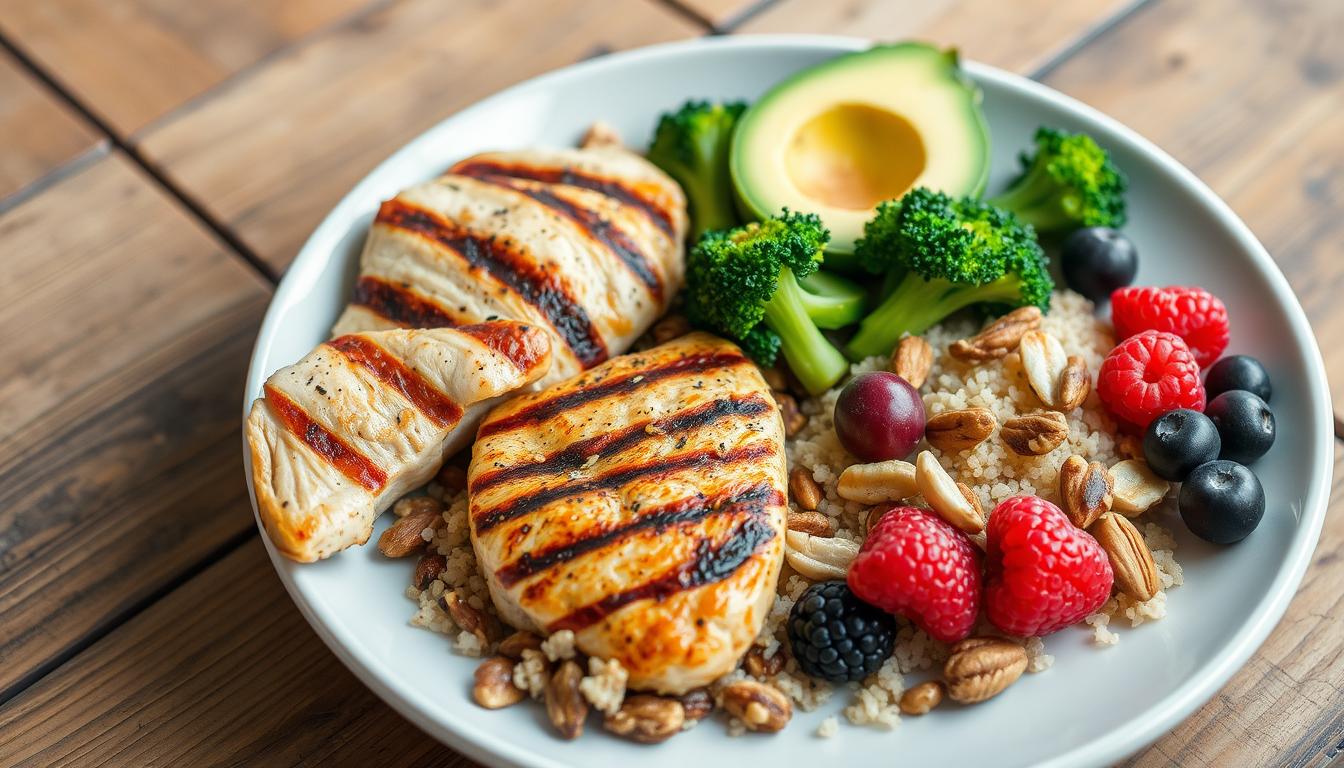
You don’t have to follow strict rules to get the right balance. Just eat a variety of foods that have all three macros. Try meals like grilled chicken with quinoa and avocado. These meals are tasty and give you the nutrients you need for lasting weight loss.
Calculating Your Macros
Learning to calculate your macros is key to reaching your fitness and nutrition goals. By focusing on macro calculation, you can create a nutrition plan that fits your needs. This ensures you meet your daily caloric needs in the best way.

First, figure out your daily caloric needs. You can use formulas like the Mifflin-St Jeor Equation. It takes into account your age, gender, weight, height, and activity level. After finding your daily caloric needs, you’ll need to split them into macronutrients: carbs, proteins, and fats.
When personalizing your nutrition, think about your goals. For muscle building, you might want more protein. For weight loss, controlling carbs and fats is important. A common ratio for weight loss is 40% carbs, 30% protein, and 30% fats. But, you can adjust this based on your preferences and body’s response.
Tracking your macros can be easier with tools and apps. These digital helpers make logging your food and calculating your macros simple. They help you stick to your personalized nutrition plan.
Setting Realistic Goals
Starting a weight loss journey can feel overwhelming. But, setting realistic goals makes it easier. It’s important to know your body’s needs and limits. Start with small, gradual changes that you can keep up with over time.
Setting realistic goals means creating habits you can keep up with. Instead of trying to lose a lot of weight quickly, aim for one to two pounds a week. This way, you avoid burnout and work towards lasting success.
When you aim for achievable targets, you stay motivated. It’s not about quick results but about building a healthier lifestyle. By reaching small, realistic goals, you build confidence and see progress over time.
Remember, weight loss planning should be flexible. Life changes, and your goals should too. Focus on being consistent, not perfect. By setting achievable targets and building sustainable habits, you lay a strong foundation for lasting health.
Understanding Macros: Balancing Protein, Carbs, and Fats for Weight Loss
Syncing macros with your diet can lead to better health and weight loss. It’s key to know that the right macro ratios are crucial for your fitness goals. The balance of protein, carbs, and fats is essential for your body’s optimal function.
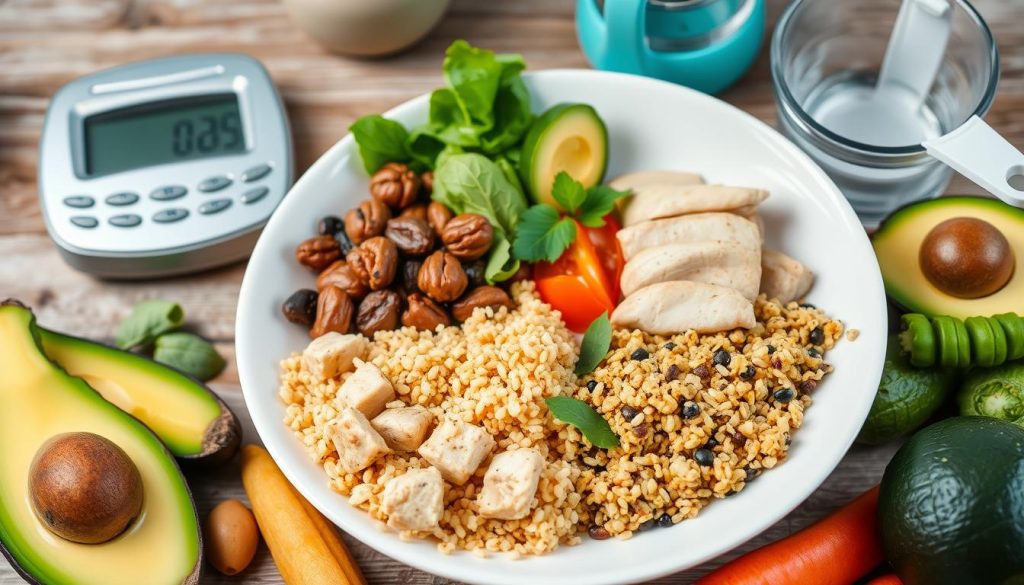
Choosing nutrient-dense foods is a big part of success. These foods are rich in vitamins and minerals. They keep you energized and meet your nutritional needs while following your macro plan.
Remember, each macro has its role in your diet and weight loss. Protein builds muscle, carbs give energy, and fats support your body’s functions. Finding the right balance helps you lose weight and stay healthy.
Learning to match your macros with your dietary needs is the first step to weight loss success. By eating nutrient-dense foods and managing macro ratios, you’ll move towards a healthier lifestyle.
Tools and Apps to Track Your Macros
In today’s world, using technology can really help with your diet. Macro tracking apps have changed how we watch what we eat. They act as digital food diaries, helping you log meals and keep track of your nutrition.
Apps like MyFitnessPal, Cronometer, and Lose It! have lots of features. MyFitnessPal has a huge food database. Cronometer gives detailed nutrient info, great for tracking vitamins and minerals. Lose It! is easy to use, perfect for beginners with nutrition technology.
These tools are very helpful, but they have their downsides. Some find ads in free versions annoying. Others like the extra details in paid versions. Still, macro tracking apps make tracking your diet easy and accurate.
Using digital food diaries can really help you stay on track. By using nutrition technology, you make counting macros simpler. This sets you up for success in reaching your diet goals.
How to Stick to Your Macro Plan
Sticking to your macro plan can really boost your diet success. A key part of this is meal planning. Spend some time each week planning and prepping your meals. This way, you can keep your diet on track and balance your protein, carbs, and fats.
Preparing meals ahead of time is a smart move. Cooking in batches and storing meals in containers saves time. It also helps you avoid deviating from your plan. It’s not just about hitting your macro numbers; it’s about creating a success-friendly environment.
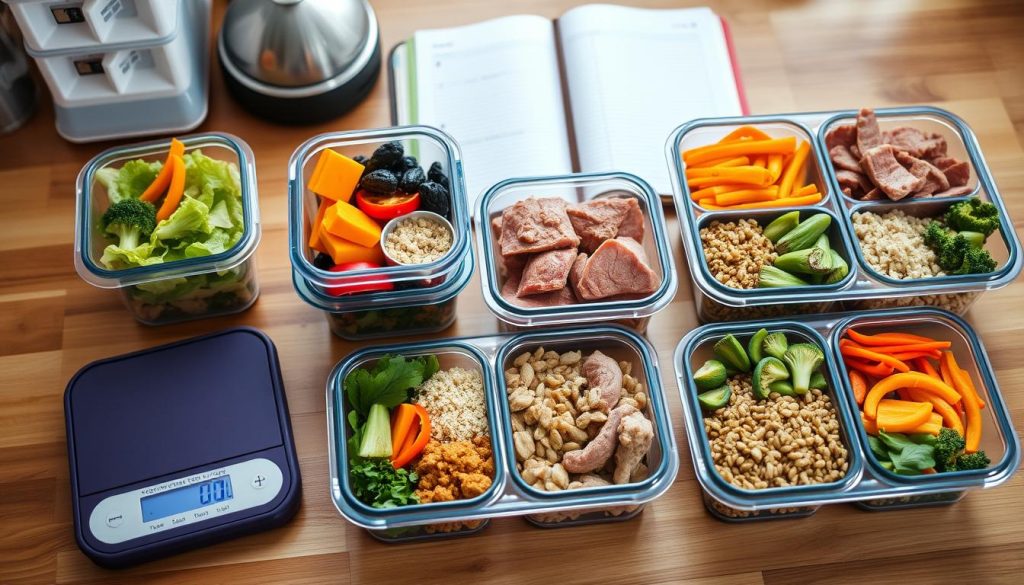
Managing cravings is also important. Find healthy alternatives for your cravings and add them to your meal plans. For instance, if you want sweets, try a macro-friendly dessert. This way, you can satisfy your cravings without losing your diet progress.
Motivation is another key factor. Keep your goals in mind and remember why you started. Having supportive people around, online or in person, can also help you stay motivated.
Success in sticking to your macro plan comes from good meal planning, managing cravings, and consistent effort. Stay prepared and motivated to reach your health goals.
Adapting Your Macros for Different Activities
Changing your meal plan for different activities can really boost your workout nutrition. High-carb meals before and after intense workouts give you the energy and help you recover. This is why adjusting your macros is so important.
By changing your macronutrient intake, you meet the energy needs of different exercises. This also helps your body perform better.
Macro cycling is a way to adjust your carb, protein, and fat intake on different days. For example, endurance athletes might need more carbs on long run days. Powerlifters might need more protein to help their muscles recover.
Knowing how to adjust your macros helps your body get what it needs. This ensures you’re supporting your body’s needs effectively.
Adding pre- and post-workout nutrition to your routine helps keep your energy up. Carbohydrate-rich meals before workouts fuel intense sessions. Protein-rich meals after workouts help repair and recover muscles.
By using macro cycling, you tailor your nutrition to your fitness needs. This leads to better results and performance.
Conclusion
Understanding and managing your macros is key to successful weight management. Balancing protein, carbs, and fats helps with weight loss and long-term health. Each macronutrient plays a vital role, helping you tailor your diet to your goals.
Macro management is more than just daily targets. It’s a lifestyle choice. By making informed food choices, you meet your health goals. Using tools and apps helps you stay on track, adapting your diet as needed.
Successful weight management is a journey. Learning about macros and applying them to your life leads to lasting health and fitness. Be flexible, stay informed, and let macro management help you reach your goals. Your body will appreciate the care you give it every day.
Quick Recommendation: Our blog is filled with tips and guides to weight loss. If your seeking for a proven, safe and tested product that has fat burning ability, boost metabolism and increased energy level and anti aging. This product is for you Nagano Fat Burning Tonic